
Different Shapes Of Staircase


The shape of a staircase is usually defined by the available space, floor layout, and structural constraints rather than personal preference.
In most homes, there are only one or two viable options that will work safely, comfortably, and in line with building regulations.
As a general rule, wider staircases with fewer changes of direction are more comfortable to use.
Where space allows, landings are usually preferred over winders for main staircases, as they provide a safer and more natural walking rhythm.
Straight Flight Staircase
A straight flight staircase is the simplest and most direct form, running in a single line between floors.
It offers consistent tread geometry and clear sightlines, which makes it comfortable and easy to use on a daily basis.
However, it requires sufficient linear space and headroom, which is not always available in typical UK homes.
Straight flights are commonly used where the layout allows for it, or as part of a longer run combined with a landing or turn.


Quarter Turn Staircase
Quarter turn staircases change direction by 90 degrees, usually using a landing or a set of winders.
Using a landing at the turn generally improves comfort and safety, especially for a main staircase used every day.
Winders can be used where space is more limited, but they introduce variation in tread width and require careful design.
This type of staircase is very common in residential properties, offering a good balance between space efficiency and usability.
Half Turn Staircase
A half turn staircase changes direction by 180 degrees and is often arranged as two parallel flights.
When space allows, a landing between the two flights creates a comfortable and practical main staircase.
In tighter layouts, a double winder arrangement can be used, although this is usually better suited to smaller houses or secondary staircases.
Half turn staircases are frequently chosen where floor plans are compact but a conventional staircase is still required.

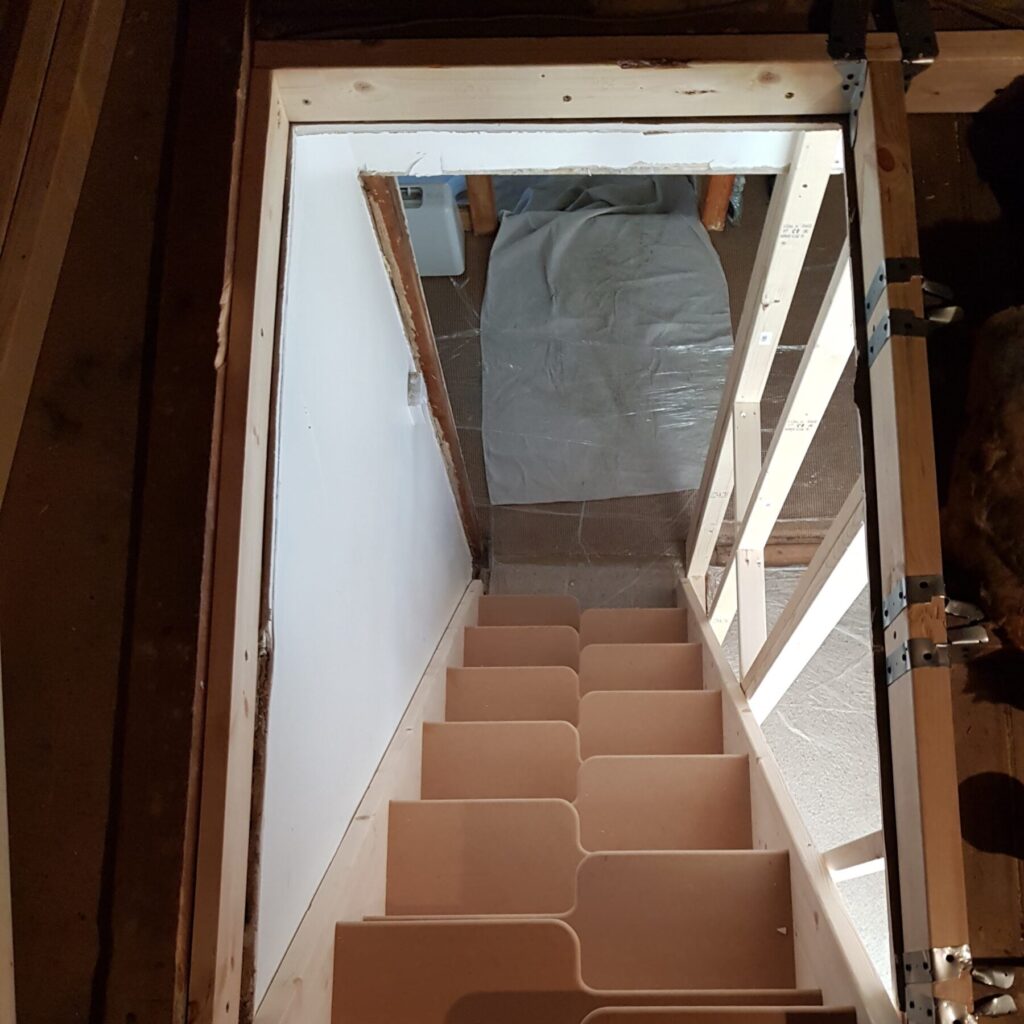
Space-Saver / Paddle Staircase
Space-saver or paddle staircases are designed for situations where there is not enough room for a conventional staircase.
They use alternating treads to reduce the overall length of the staircase, allowing access in very restricted spaces.
Due to their steeper angle and non-uniform treads, they are generally used for lofts or secondary rooms rather than as a main staircase.
These staircases are subject to specific building regulation conditions and are typically considered a practical solution rather than a comfort-focused one.
Every staircase shape comes with its own spatial and structural considerations.
In many cases, the final solution is determined by what works best within the existing layout rather than by design preference alone.